Table Of Content
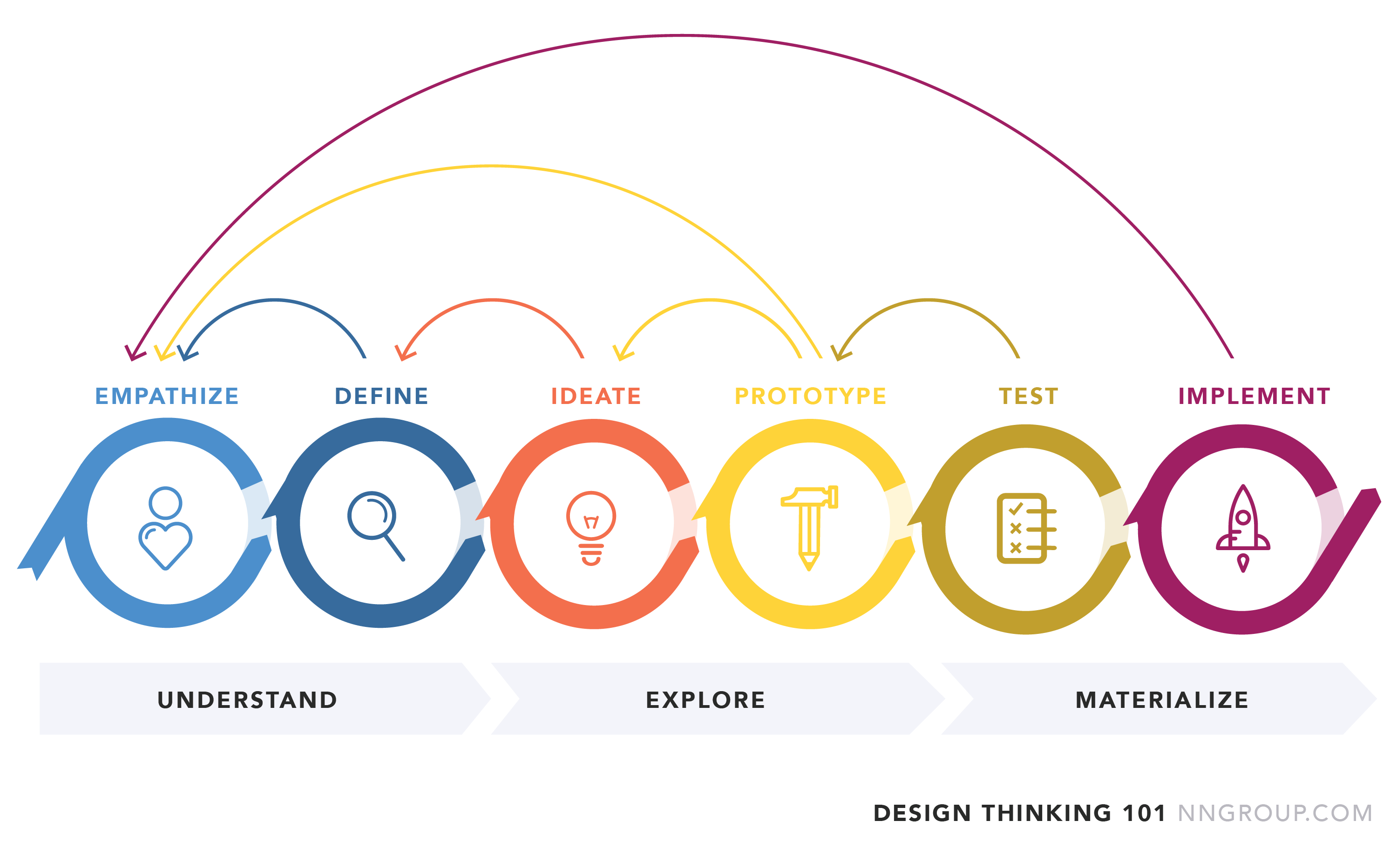
When Eppinger ran into a primary school educator who told him design thinking was big in his school, Eppinger thought he meant that they were teaching students the tenets of design thinking. Repeating this loop of prototyping, testing, and gathering user feedback is crucial for making sure the design is right — that is, it works for customers, you can build it, and you can support it. When a team from MIT’s Integrated Design and Management program together with the design firm Altitude took on that task, they met with walker users to interview them, observe them, and understand their experiences. Here, we introduce design thinking, how it came to be, how it is being used, and steps and tools for mastering it. You’ll find our particular take on design thinking, as well as the perspectives of others.
Share Knowledge, Get Respect!
UserTesting is ideal if you’re designing a mass-market product with a wide appeal, since the test participants are recruited and won’t be your real users. If you prefer to observe and talk to actual users ‘in-the-wild’, you’ll get better user data from tools like Hotjar Recordings and Surveys. After ideating, designing and prototyping, you’re now ready to test your solutions. Ideally, you’ll test with real users, collect feedback and engage with them throughout. In this stage of the Design Thinking process, you will use the data, observations, and thinking done in the empathize stage in order to create a problem statement that best reflects the challenges affecting your users. Keeping in mind the stages of the model, we have collected some of the best Design Thinking tools to help you create real value for your customers and users.

Design thinking tools for the complete process
Anyone can do it and with his guidance, everyone can improve their understanding of sketching and the techniques that can help you to sketch better. Kevin has a great website Drawing for Product Designers where you can get more information and his book. Getting your ideas out of your mind and onto paper is one of the most vital tools to improve the effectiveness of your Design Thinking output. Jason has made something very useful for folks who are working at the intersection of human-centered design, innovation and the public good. Public Design Vault is a curated directory with 500+ design tools & resources for public good, all in one place. There’s even a forum and chat group to ask questions and help one another with answers.
How to Create an Unforgettable Training Session in 8 Simple Steps
This helps everyone stay on the same page, while giving them the ability to add their own ideas freely and easily. Mural facilitates effective collaboration both in person and remotely, making it ideal for design thinking workshops for co-located and distributed teams. Plus, it has tons of ready-to-use templates (like the ones we listed above) to help you get started.
Design thinking is more of a mindset or an approach with numerous stages, each of which can be supported by different tools that help understand the design process. Since its introduction in the Science of the Artificial by Simon Herbert in 1969, Design Thinking has refined business models, educational institutions, innovation processes, product and service design, and human mindsets. Human-centered design offers useful and powerful tools, and it is not enough. A design practice needs to integrate various methods to be most effective.
Similarities between Design Thinking and Agile
While design thinking and agile teams share principles like iteration, user focus, and collaboration, they are neither interchangeable nor mutually exclusive. These stages are different modes that contribute to the entire design project rather than sequential steps. The goal is to gain a deep understanding of the users and their ideal solution/product.
International business, UPS Design Thinking project spurs business innovation - University of South Carolina
International business, UPS Design Thinking project spurs business innovation.
Posted: Thu, 10 Feb 2022 08:00:00 GMT [source]
The difference between interviews and focus groups is that focus groups include more than one person, and they answer the questions and discuss it together. However, it has its weakness as many people feel shy to express their thoughts in groups or get influenced by others’ answers. The qualitative methods refer to the research tools that collect nominal descriptive rather than numerical data. These types of data are crucial as it helps us to understand ulna needs and feelings, which can’t be described in numbers.
The relationship between human-centered design and design thinking
Wicked problems demand teams to think outside the box, take action immediately, and constantly iterate—all hallmarks of design thinking. There are drawbacks to the 3D printing prototypes, such as the long time required to complete the model and the cost required to create several prototypes. Guide for 3D Printing Technologies includes more details about these types.
Templates for the Define stage

Don Norman takes HCD a step further and prefers the term People-Centered Design. The design sprint is a very structured version of design thinking that fits into the timeline of a sprint (a sprint is a short timeframe in which agile teams work to produce deliverables). Developed by Google Ventures, the design sprint seeks to fast-track innovation. A design sprint is a 5-day intensive workshop where cross-functional teams aim to develop innovative solutions. The team aims to understand the problem, typically through user research.
In this Toolkits section you will find, Design Thinking Toolkits for Libraries, Schools, Healthcare, Corporations and many business sectors. In addition to Design Thinking Toolkits, there are many individual tools that support the practice of Design Thinking such as Customer Journey Mapping, Day in the Life and Persona techniques documented here. Building your skills in design thinking can be accelerated by learning new tools and implementing tried and tested Design Thinking Toolkits. The design thinking process should not be seen as a concrete and inflexible approach to design; the component stages identified should serve as a guide to the activities you carry out.
It’s a visual space where designers, copywriters, and product managers can easily work together on shared projects. Data is massively important for this stage of the Design Thinking process and so using Design Thinking tools for testing can really help make this a success. In this article, we've covered 10 different creative AI tools that can enhance your projects today. This free generative AI tool has a free-forever plan with 60 minutes of video processing time refreshed monthly. Opus Clip is an AI-driven video clipping tool that enables creative professionals to effortlessly transform long videos into engaging, viral shorts. It automates the editing process, identifying and extracting key moments and adding captions and transitions with just one click.
Saves your settings and preferences, like your location, for a more personalized experience. Governs the storage of data necessary for maintaining website security, user authentication, and fraud prevention mechanisms. Start applying these methods to your work today with the Design Thinking template bundle.
This includes the mastery of tools, techniques, and materials, as well as the ability to implement and execute design ideas effectively. Once the team identifies one or more solutions, they determine whether the organization can implement them. In theory, any solution is feasible if the organization has infinite resources and time to develop the solution. However, given the team’s current (or future resources), the team evaluates if the solution is worth pursuing.
Design Thinking is not exclusive to designers—all great innovators in literature, art, music, science, engineering and business have practiced it. Well, that’s because design work processes help us systematically extract, teach, learn and apply human-centered techniques to solve problems in a creative and innovative way—in our designs, businesses, countries and lives. The iterative, non-linear nature of design thinking means you and your design team can carry these stages out simultaneously, repeat them and even circle back to previous stages at any point in the design thinking process. It is important to note the five stages of design thinking are not always sequential.




No comments:
Post a Comment